What to Expect During a Commercial Roof Replacement Project
Table of Contents
- Why Knowing the Roof Replacement Process Matters
- What Happens During the Initial Roof Inspection
- Selecting the Right Materials for Your Building
- Preparing Your Property for the Project
- The Roof Replacement Process, Step by Step
- Common Challenges and How We Handle Them
- Keeping Your New Roof in Great Shape
- Finding the Right Roofing Contractor for the Job
- Wrapping It All Up
Key Takeaways
- A commercial roof replacement involves several critical steps—inspection, planning, material selection, and installation.
- Working with an experienced roofing contractor helps minimize downtime and avoid costly mistakes.
- Understanding the roof replacement process makes it easier to budget and prepare your building.
- Regular inspections after installation extend your roof’s lifespan and performance.
Why Knowing the Roof Replacement Process Matters
We’ve noticed that business owners often delay roof work because they don’t know what to expect—or they fear the process will shut down operations. The reality is, modern commercial roof replacement projects are far more organized and less disruptive than most people think.
When we take on a roofing project at Kappa Commercial Roofing LLC, we start by understanding how your business runs day to day. Are there sensitive areas that need protection from dust or debris? Do you operate during specific hours we should work around? These details help us plan efficiently, ensuring you stay open and productive while we handle the heavy lifting above.
More importantly, understanding the roof replacement process helps you stay in control. You’ll know where your money is going, why certain materials are recommended, and how long each phase takes. And once you see the process clearly, the entire project feels less like a headache and more like a long-term investment in your building’s health and safety.
What Happens During the Initial Roof Inspection
Every successful commercial roof replacement begins with a thorough inspection. This is where we get to know your roof’s story—the good, the bad, and everything in between. During our initial assessment, we look for signs of wear such as blistering, cracks, or water stains on the ceiling below. Sometimes the damage is obvious, but other times, it’s hidden beneath the surface. That’s why we often perform moisture scans and core cuts to see what’s happening under the top layer.
We’ll also check drainage systems, flashing details, and structural elements to make sure the deck beneath the roof is sound. If it’s not, we’ll discuss repair or reinforcement options before moving forward. For example, if the inspection shows only minor issues, a targeted roof repair might be more cost-effective than a full replacement.
Once the inspection is complete, we’ll walk you through the findings in plain terms—no jargon, no upselling. You’ll get a full report and recommendations that fit your needs and budget. It’s not about pushing the most expensive option; it’s about making sure your business is protected for the long haul.
Selecting the Right Materials for Your Building
Choosing the right roofing system isn’t a one-size-fits-all decision. Each building has its own demands based on size, layout, and environment.
In our experience, the most common options for commercial roof replacement include TPO, EPDM, PVC, and metal roofing.
Each has strengths that suit different needs:
- TPO (Thermoplastic Polyolefin) is one of the most energy-efficient choices. Its reflective surface helps reduce cooling costs, which makes it a favorite for warehouses and retail spaces.
- EPDM (Ethylene Propylene Diene Monomer), a synthetic rubber membrane, offers excellent weather resistance and flexibility, perfect for large flat roofs.
- PVC roofing provides outstanding chemical resistance and is ideal for buildings with rooftop equipment or ventilation systems.
- Metal roofing is unmatched in durability and can last several decades with minimal maintenance.
We like to sit down with building owners and talk through these options—not just in terms of cost, but performance, maintenance, and warranty. The goal is to choose a system that gives you peace of mind and lasting value.
After all, a roof isn’t just about covering your building; it’s about protecting your investment beneath it.
Preparing Your Property for the Project
Once materials are chosen and the schedule is set, it’s time to prepare the site. We work closely with clients during this phase because proper preparation makes the entire project smoother.
That might mean temporarily adjusting parking or delivery zones, setting up safety barriers, or identifying which areas employees should avoid during work hours. If there’s rooftop HVAC or signage, we’ll coordinate with your vendors to remove or secure equipment safely.
We’ve found that clear communication is the key to minimizing disruptions. We make it a point to keep our clients informed of our daily schedule, progress, and any changes that might affect operations. Our team understands that your business needs to keep running, and we plan accordingly.
We’ve completed roof replacements for manufacturing facilities, office buildings, and retail spaces—each with its own rhythm. By adapting to your workflow, we make sure the project moves forward without interfering with your productivity.
The Roof Replacement Process, Step by Step
Here’s where the action happens. The roof replacement process itself unfolds in several stages, each carefully managed to maintain safety and quality.
Step 1: Removing the Old Roof
We start by removing existing materials down to the deck. Depending on the system, this could involve multiple layers. It’s messy work, but necessary. A clean surface ensures the new roof adheres properly and performs as intended.
Step 2: Inspecting and Repairing the Deck
Once the roof is stripped, we examine the deck again. Any soft spots or damaged areas are repaired before we proceed.
Step 3: Installing Insulation and Vapor Barriers
Proper insulation isn’t just about comfort—it’s about energy efficiency. We install high-quality insulation layers and vapor barriers that help regulate indoor temperatures and prevent condensation from causing future damage.
Step 4: Installing the New Roof System
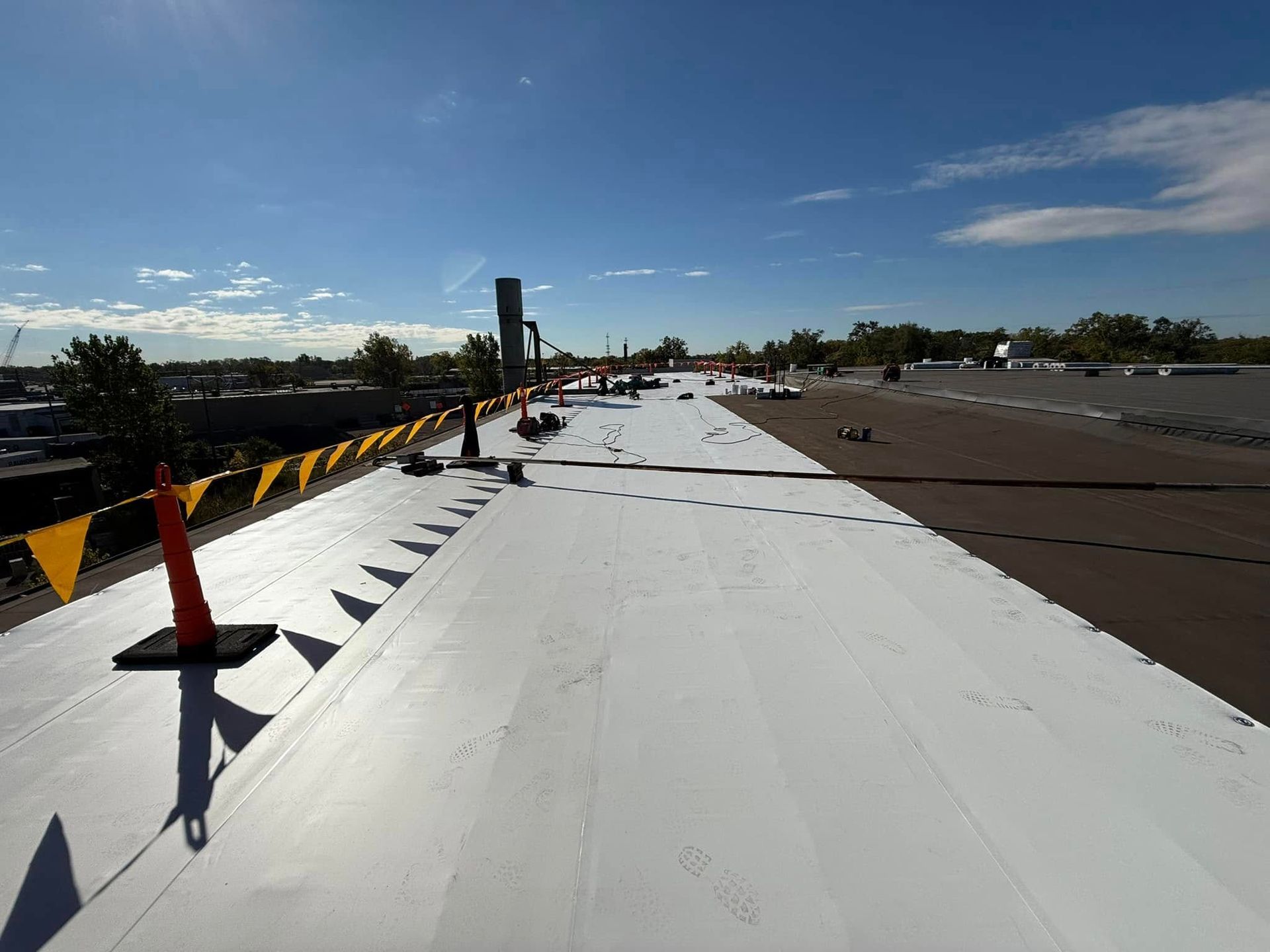
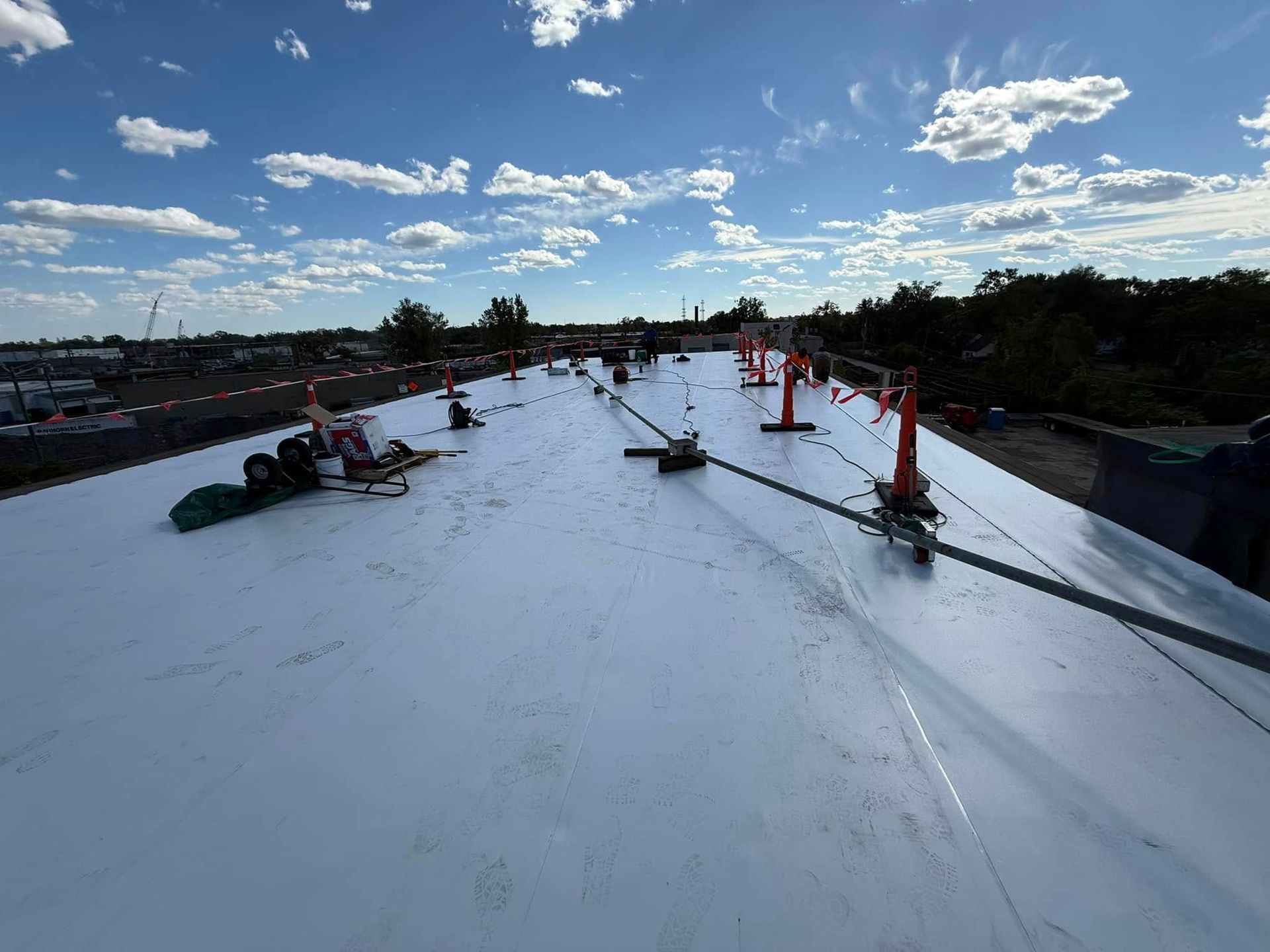
This is where your new roof takes shape. Whether it’s TPO, EPDM, or another system, each layer is installed, welded, and sealed with precision.
Step 5: Flashing and Detailing
Once the main roofing system is in place, we add flashing around vents, drains, and edges. These details are small but crucial—they’re the first line of defense against leaks.
Step 6: Final Inspection and Cleanup
After installation, we perform a detailed final inspection. Our supervisors walk the entire roof, check seams, flashing, and drainage points, and verify that everything meets both our standards and the manufacturer’s requirements.
Common Challenges and How We Handle Them
Every project has its surprises. Sometimes weather delays us for a day or two. Other times, we uncover hidden water damage under old layers that wasn’t visible during the inspection.
Instead of seeing these as setbacks, we treat them as opportunities to ensure your new roof is done right. If something unexpected comes up, we’ll explain the issue immediately, show you the problem, and discuss solutions before proceeding.
For clients wondering whether repair or full replacement is better, we always suggest checking our commercial roof repair vs. replacement guide to make an informed choice before starting any project.
Keeping Your New Roof in Great Shape
Once your commercial roof replacement is complete, the work isn’t over—it’s just the beginning of a new maintenance cycle. We like to remind our clients that a roof is a living system; it needs periodic attention to perform its best.
We recommend scheduling professional inspections twice a year—ideally in the spring and fall. These checkups help identify small issues before they become costly repairs.
We also encourage building owners to keep a “roof file”—a simple folder or digital record of installation details, maintenance logs, and inspection reports.
With proper care, your new roof can last decades, especially when maintained by a trusted roofing contractor like Kappa Commercial Roofing LLC.
Finding the Right Roofing Contractor for the Job
Choosing a roofing contractor is just as important as choosing the right material. Experience, communication, and transparency matter more than anything.
We always tell clients: don’t just look for the lowest bid. Look for proof of quality—photos of past work, manufacturer certifications, and client testimonials.
At Kappa Commercial Roofing LLC, we believe in earning your trust through our actions. From the first call to the final inspection, our goal is to make the process simple, clear, and professional.
If you’re ready to get started, contact our team today to schedule your inspection or consultation.
Wrapping It All Up
A commercial roof replacement isn’t just about installing a new layer of material—it’s about securing your business for the years ahead. When done right, it improves energy efficiency, enhances building safety, and preserves the value of your property.
We’ve seen firsthand how much difference a well-installed roof can make. Business owners tell us that after the project, their energy bills drop, leaks disappear, and their peace of mind returns.
If you suspect your roof is nearing the end of its life or you’ve noticed persistent leaks, reach out to our experienced roofing contractors today through our Contact Page. You can also learn more about our services at kapparoofing.com.
Kappa Commercial Roofing LLC — trusted by local businesses for reliable, long-lasting commercial roofing solutions.
Frequently Asked Questions
What makes our commercial roof replacement process different?
We focus on planning and communication from start to finish. Our team walks you through every step of the commercial roof replacement, minimizing disruption to your operations while ensuring top-quality materials and installation.
How long does a roof replacement process usually take?
The roof replacement process typically takes a few days to a couple of weeks, depending on your roof’s size and condition. We always keep you updated with daily progress so you know exactly what to expect and when your new roof will be ready.
Why should you hire us as your roofing contractor?
As an experienced roofing contractor, we bring expertise, transparency, and reliability to every project. We don’t just replace roofs—we protect your business investment with durable systems designed to last for decades.
Can we repair instead of replacing a commercial roof?
Yes, if the damage is minimal, we might recommend roof repairs instead of a full commercial roof replacement. We always inspect first, explain the findings, and help you decide the most cost-effective solution for your property.
How can we help maintain your new commercial roof?
After completing a commercial roof replacement, we offer regular inspections and maintenance plans. These help spot early signs of wear, keeping your roof in top shape and extending its lifespan for years to come.
Related Posts